Your chimney has a Houston problem, not a chimney problem.
Chimney and fireplace specialists for the Gulf Coast
Humidity, wet-dry cycling and storm-driven rain wear a chimney here in ways
the national advice never mentions. We inspect with a camera, put the findings in writing, and quote
only what the report supports.
Est. 2014•25 In-House Crews•50+ Communities Served•No Subcontracting•Written Scope Before Every Job•Camera Inspection on Every Visit•Same-Day Emergency Response•Serving Greater Houston•
Start here
Three ways this usually begins
Nobody calls knowing they need smoke chamber parging. Pick the closest match and we
work backwards from there.
You use the fireplace, or you inherited one with the house, and nobody has looked at it in over a year. This is the cheapest visit we do and the one that prevents the expensive ones.
Water in the firebox, smoke coming back into the room, a smell that gets worse in summer, or noises overhead. Each of those has several possible causes that cost very different amounts.
Storm damage, water actively running in, a heating flue that will not vent, or an animal loose in the firebox. Call and we will tell you honestly whether it is a same-day job.
Fifty-six services, all delivered by our own crews from one dispatch point on
N Post Oak Rd. Pick a category to see the work Houston homeowners ask for most.
Start every job from a written baseline, not a guess
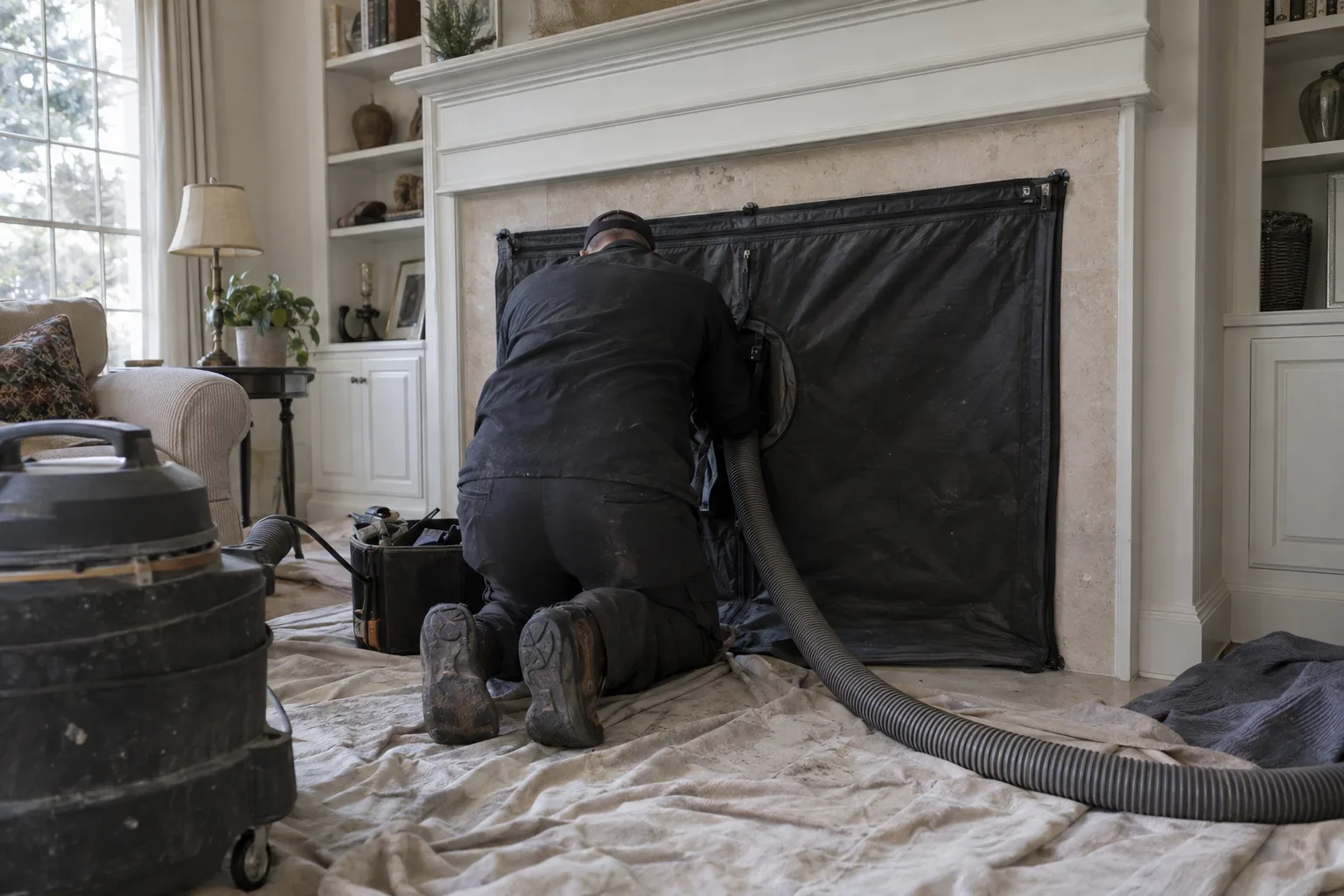
A sweep clears what has built up. The Level 1 inspection that comes with it produces the photographs and written findings that every later decision on this chimney gets measured against.
Find where the water is getting in before anyone quotes a repair
Water reaching the firebox came through the crown, the flashing, the cap or the masonry itself. They look identical from inside the house and cost very different amounts, so we isolate it first.
Measure the draft, then fix what the readings actually show
A chimney that spills smoke or will not draw is a measurement problem before it is a repair problem. Nothing here gets quoted from a description over the phone.
Service the appliance, then close the flue behind it
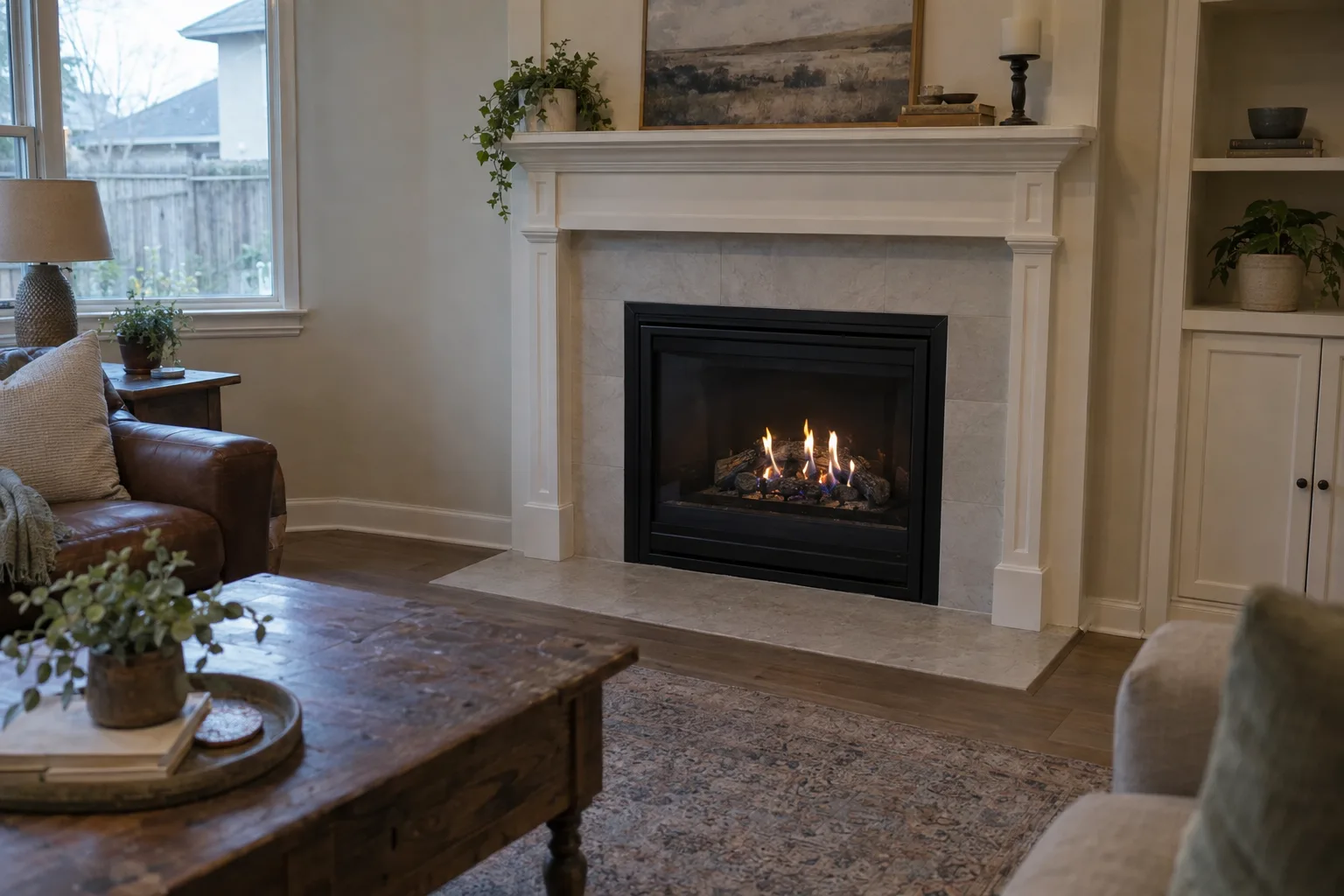
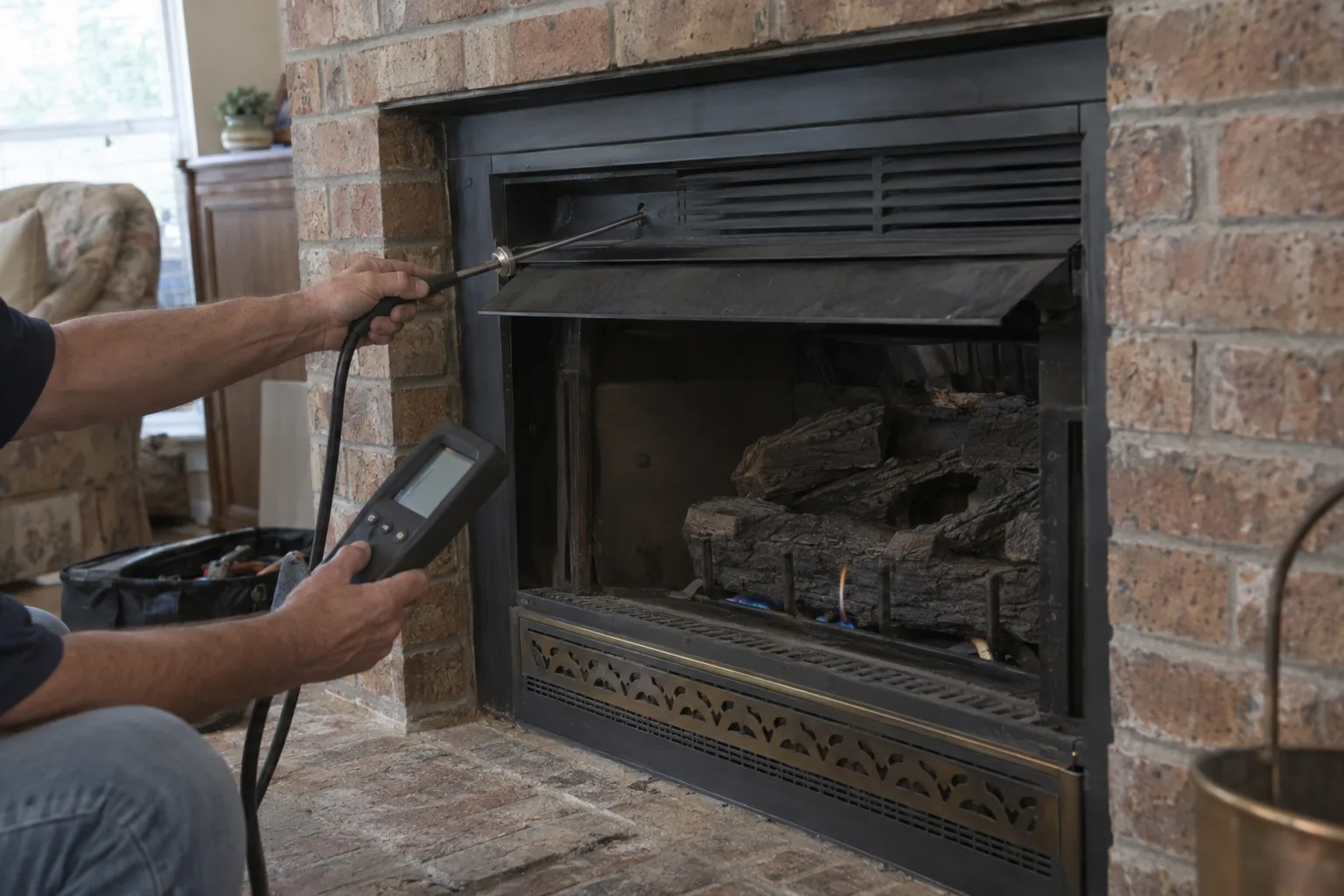
The room-side half of the system, plus whatever has moved into the chimney. Gas appliances fail quietly, so they are diagnosed with instruments rather than a visual check.
In that order, every time. Chimney work has a bad reputation because the homeowner
cannot see the thing being repaired. We fix that by showing you first.
Step 01 of 04
Camera survey
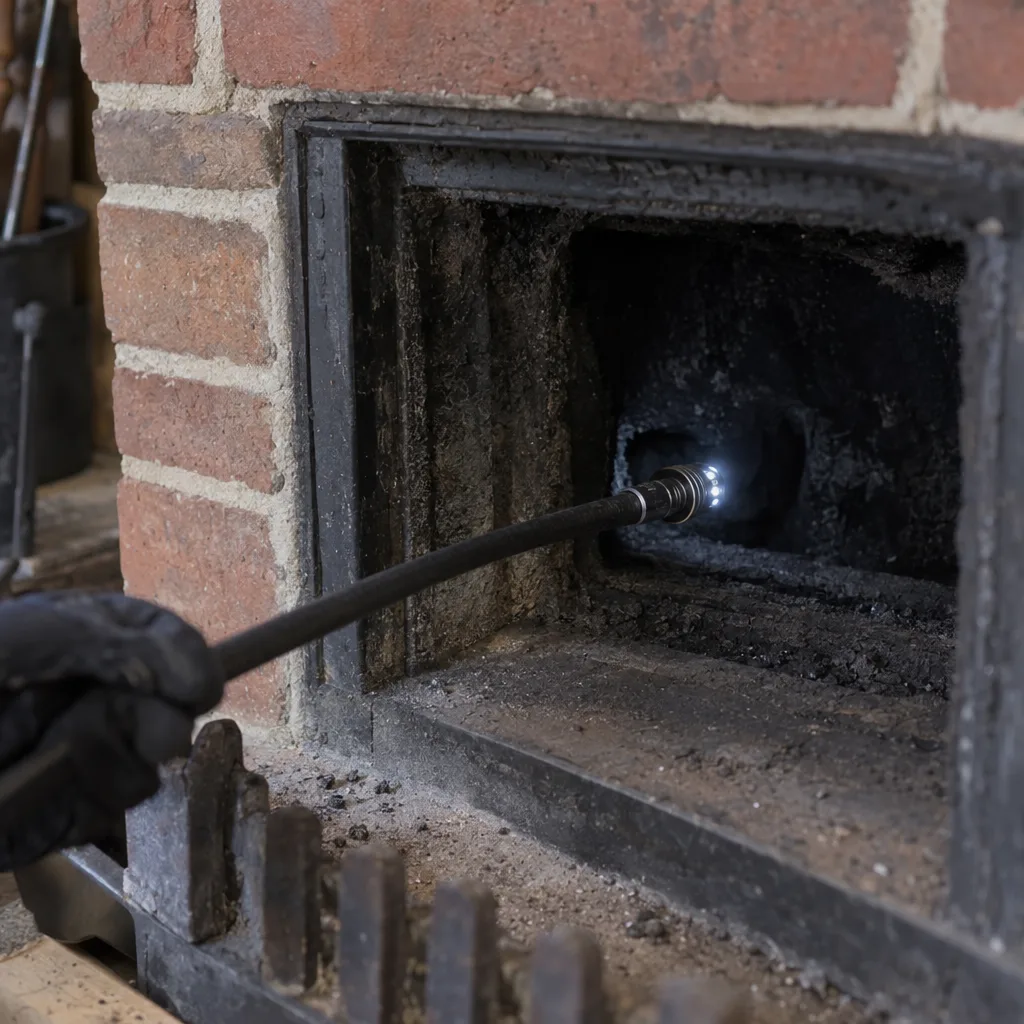
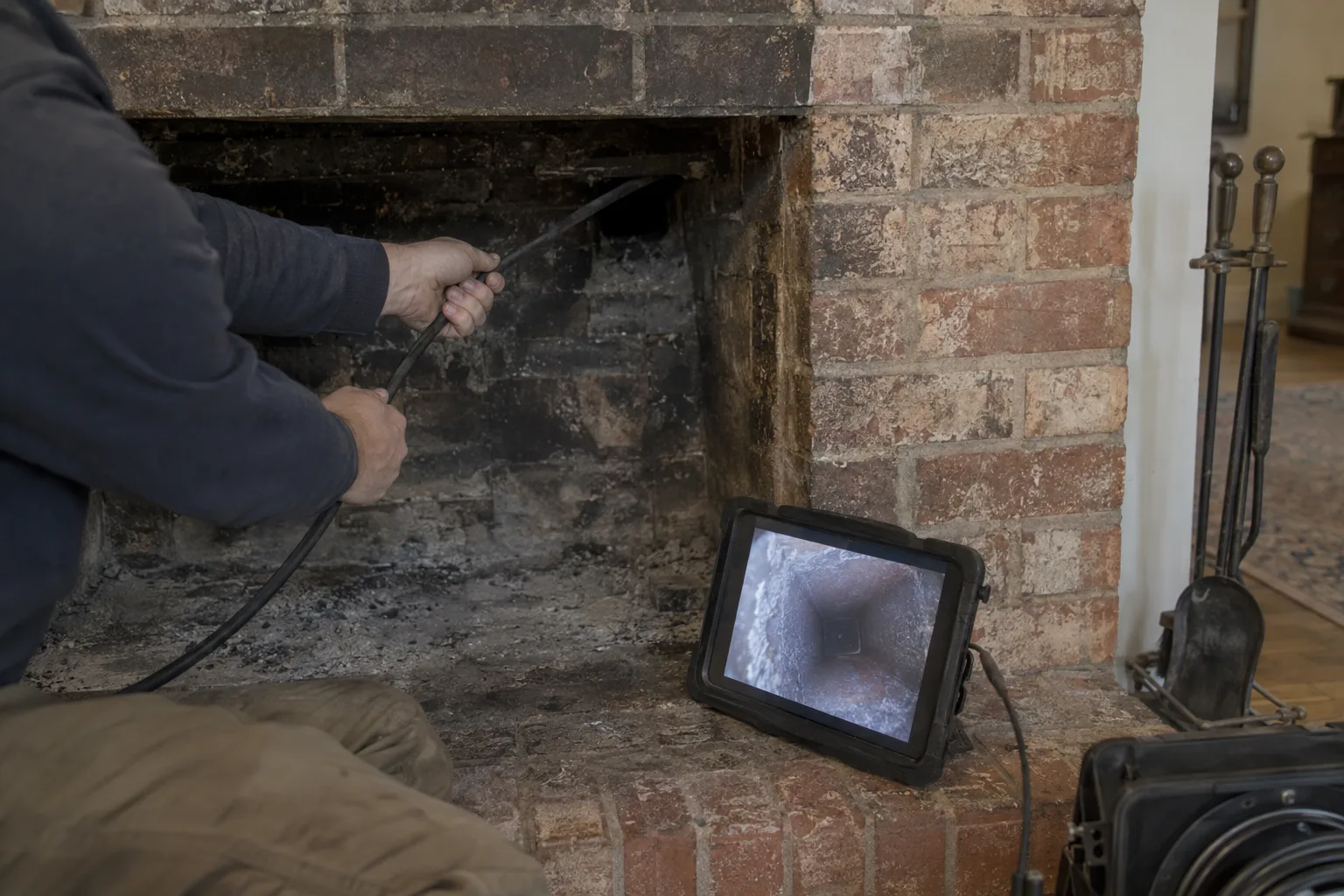
A technician walks the structure, photographs it from the roof, and puts a camera the full length of the flue. Nothing is diagnosed from the driveway, and nothing is diagnosed over the phone.
Exterior condition photographed on every elevation
Full flue interior scanned, top to firebox
Damper, smoke chamber and firebox checked by hand
Step 02 of 04
Written findings
You get the photographs, not a summary of them. Every defect is shown and named, and so is everything that turned out to be sound. The second half of that report matters as much as the first.
Photograph attached to each finding
Plain language, no trade shorthand
A written note of what needs nothing
Step 03 of 04
Scope and price
The cost arrives before the work does, line by line, with the items we think can wait another year marked as exactly that. Nothing gets scheduled until you have approved what is on the list.
Line-by-line pricing, not a lump sum
Items we recommend deferring, flagged
Approval before a crew is booked
Step 04 of 04
Our crew, not a sub
The company that inspected your chimney is the company that repairs it. Twenty-five crews, all employed here, all dispatched from one desk on N Post Oak Rd, all writing up work the same way.
25 in-house crews, zero subcontracting
Same report format at any address
One number to call afterwards
Gulf Coast conditions
Houston chimneys fail differently
Most chimney advice online was written for climates where freeze-thaw is the enemy.
Here the damage is slower, wetter and easier to miss until it is structural.
Humidity, not frost
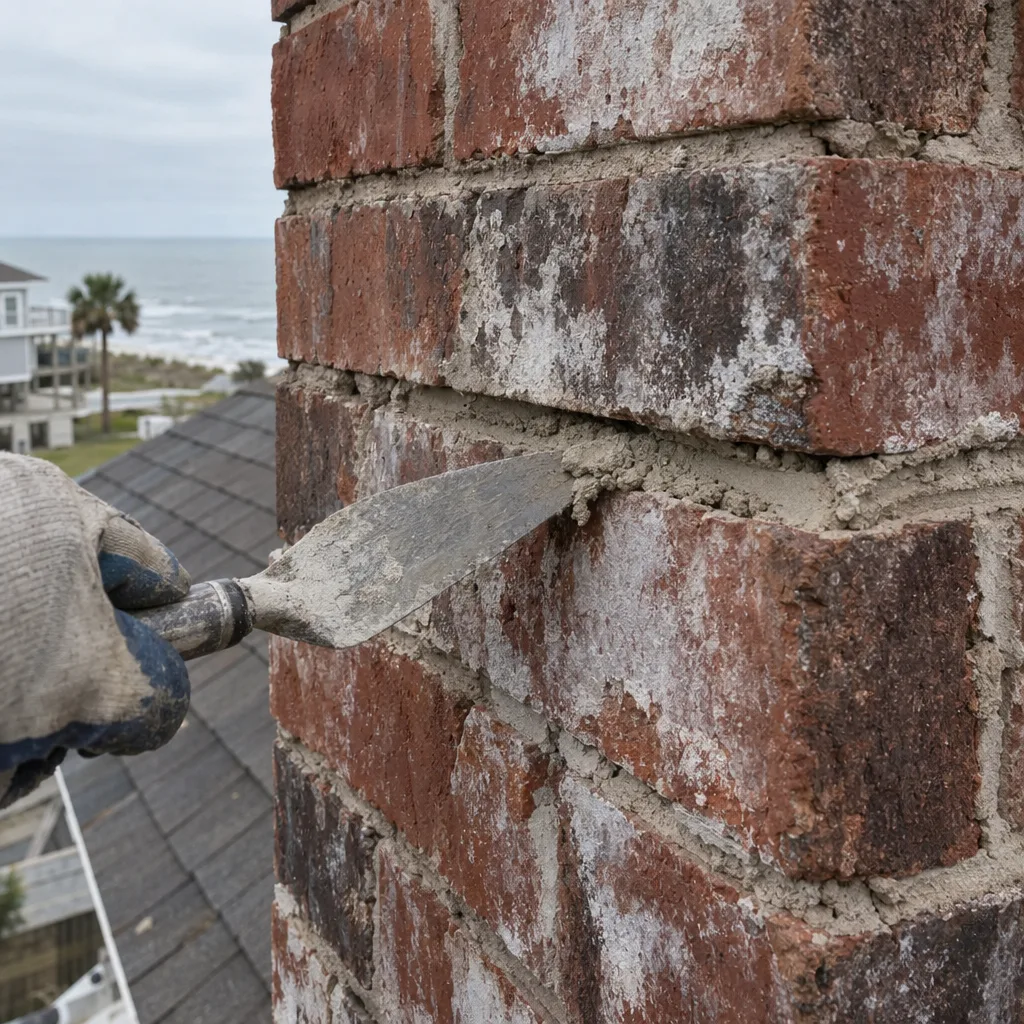
Masonry that never fully dries stays saturated year-round, and saturated brick sheds its face.
See spalling brick repair.
Storm-driven rain
Wind loads one elevation far harder than the others, which is why damage after a named storm is
almost always on a single face.
Salt and industry
Coastal and refinery-corridor addresses lose caps, covers and exposed metal years earlier than
inland ones.
Photographs from Houston roofs and fireboxes, not stock. Every job on this page
was documented before, during and after.
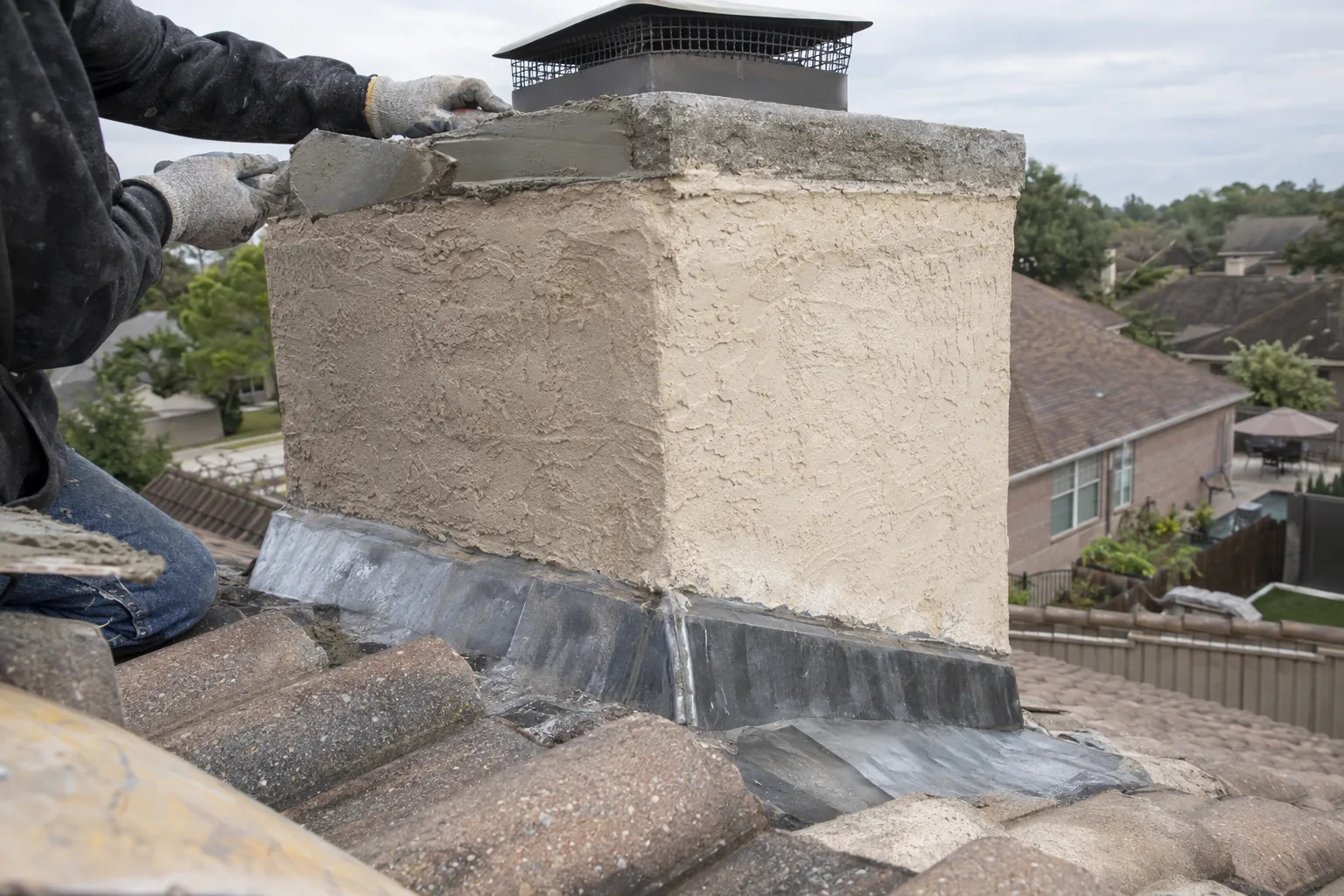
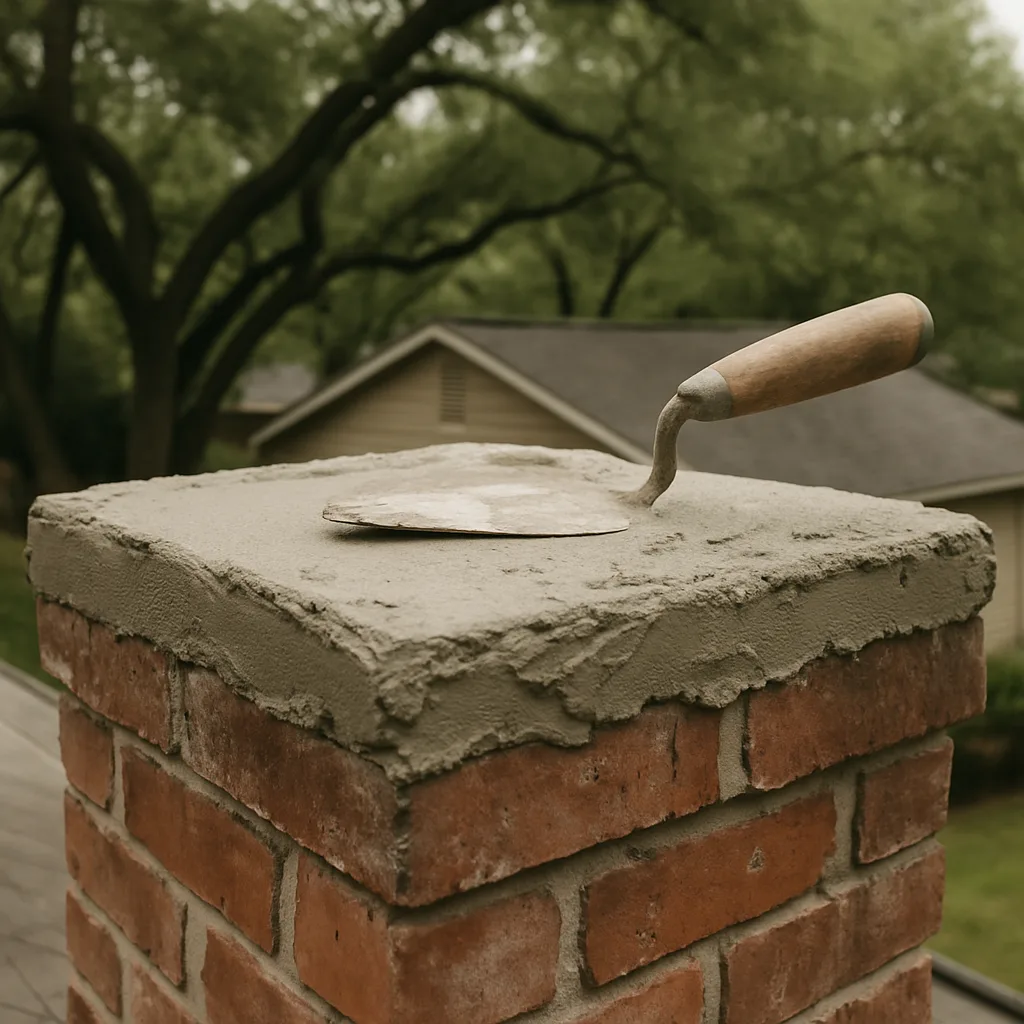
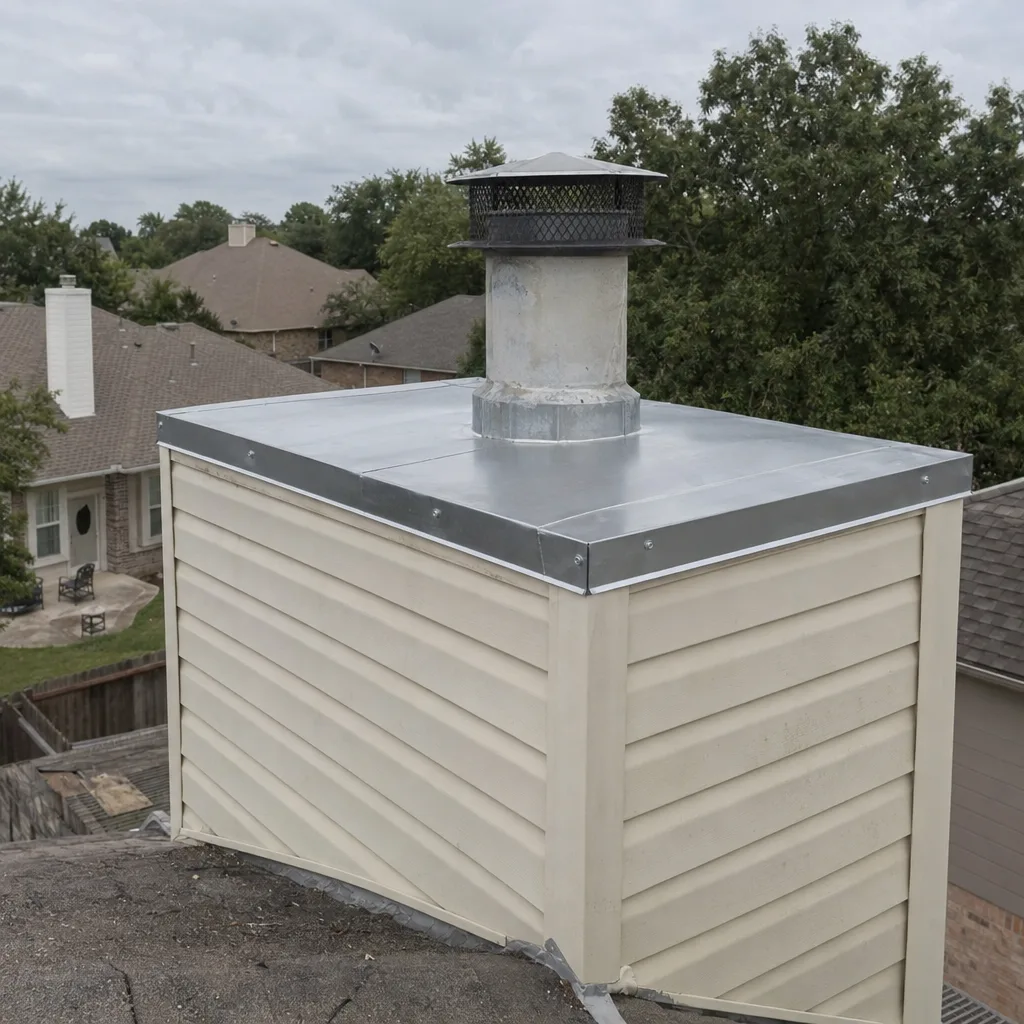
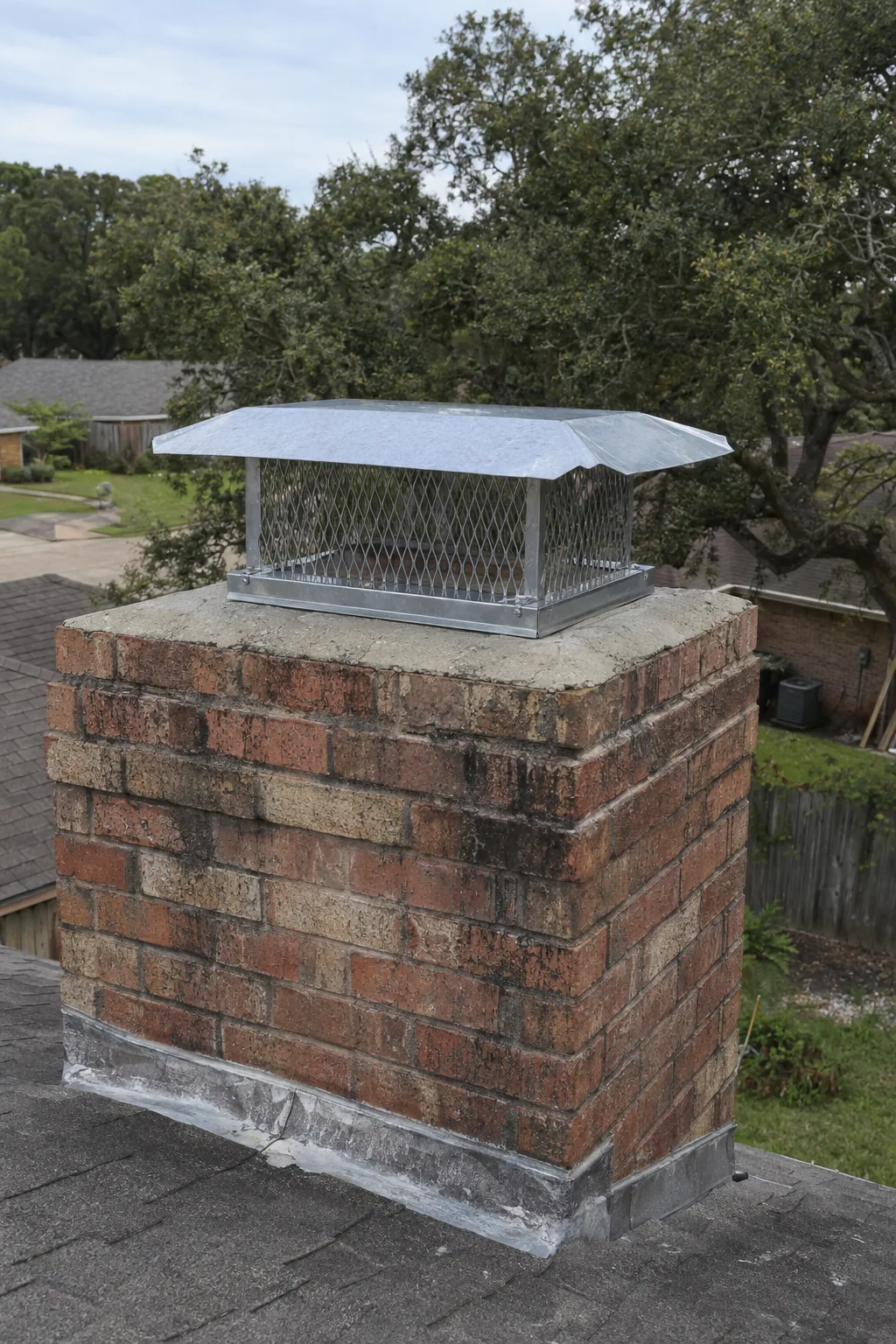
MemorialCrown rebuildCracked crown taken back and rebuilt with slope, overhang and a drip edge.Sugar LandChase cover replacementRusted cover replaced in stainless, cross-broken so water runs off.The HeightsLevel 2 camera scanFull flue survey ahead of a property sale, findings written up the same day.Spring BranchCap installationField-measured cap with spark arrestor mesh, mechanically fastened.GalvestonMortar repointingSalt-eroded joints raked to depth and repointed to match the original brick.PasadenaGas fireplace servicePressure, ignition and venting checked, logs reset to the manufacturer diagram.
Why Novak
One dispatch point, twenty-five crews, no subcontracting
Most companies covering this much of Greater Houston hand the far edges of the map to
someone else. We do not, and that is the whole difference in what you actually receive.
Swipe for more →
You see the evidence
Camera footage and photographs come with the report. If we say the liner is cracked, you look at
the crack.
We say what to skip
Every report names the items that can wait a year. A company that finds urgent work every visit is
telling you something.
Same crew, any address
A Galveston job gets the same technicians and the same report format as one in Memorial. Travel
affects scheduling, not standards.
Written before booked
Scope and price are confirmed in writing before a crew is scheduled. No day-of surprises on the
roof.
Less often than a Chicago one, more often than people assume. If you burn most weekends through the cool months, once a year. If you light three fires a season, the sweep matters less than the inspection, because on the Gulf Coast the damage comes from water and humidity rather than deposits. Either way the visit includes a Level 1 inspection, which is the part that catches the expensive problems early.
Creosote deposits absorb humidity and release it back into the room, which is why the smell usually arrives with the warm weather rather than the burning season. Negative pressure in the house then pulls that air down the flue instead of up it. Both are fixable. See fireplace odor removal.
One of four places: the crown, the flashing, the cap, or the masonry itself. They look identical from inside the house and cost very different amounts to fix, which is why we test before quoting rather than after. Start with a leak inspection.
A general home inspection does not cover the inside of a flue. Property transfer is one of the situations that calls for a Level 2 inspection with a camera scan, and finding a defect during closing is far more expensive than finding it before listing.
The species decides everything. Chimney swifts are protected under federal law while nesting and cannot be removed until the season ends. Mammals often have young in spring, and removing the adult without the juveniles creates a worse problem. We identify first, then remove, then cap so it cannot happen again. See chimney animal removal.